Disclosure: UPLIFT Desk provided these shelves at no cost for review. All opinions are my own. This post contains affiliate links.
The UPLIFT Sequence Shelves are intimidating the moment you open the box. Not because anything is hard, but because there are so many pieces, and they all connect to each other. My first reaction was to wonder what I had gotten myself into. A pile of black metal rails, a stack of Ash Gray laminate shelves, several bags of hardware, and a manual that seemed to cover a dozen different products.
Then I started building, and the whole thing flipped. Once you place the first two pieces together, the system makes sense, and it goes quickly from there.
Short version: the box looks complicated, the build is intuitive, and the result is the most solid shelving I've owned.
Best for: Anyone who wants sturdy, modular open shelving that looks like furniture, not office gear
The catch: There are a lot of parts, and the single manual covers every Sequence configuration, so it looks more daunting than your build actually is
Worth knowing: Have a power drill ready. It makes assembly much faster than working by hand
What's in the Box
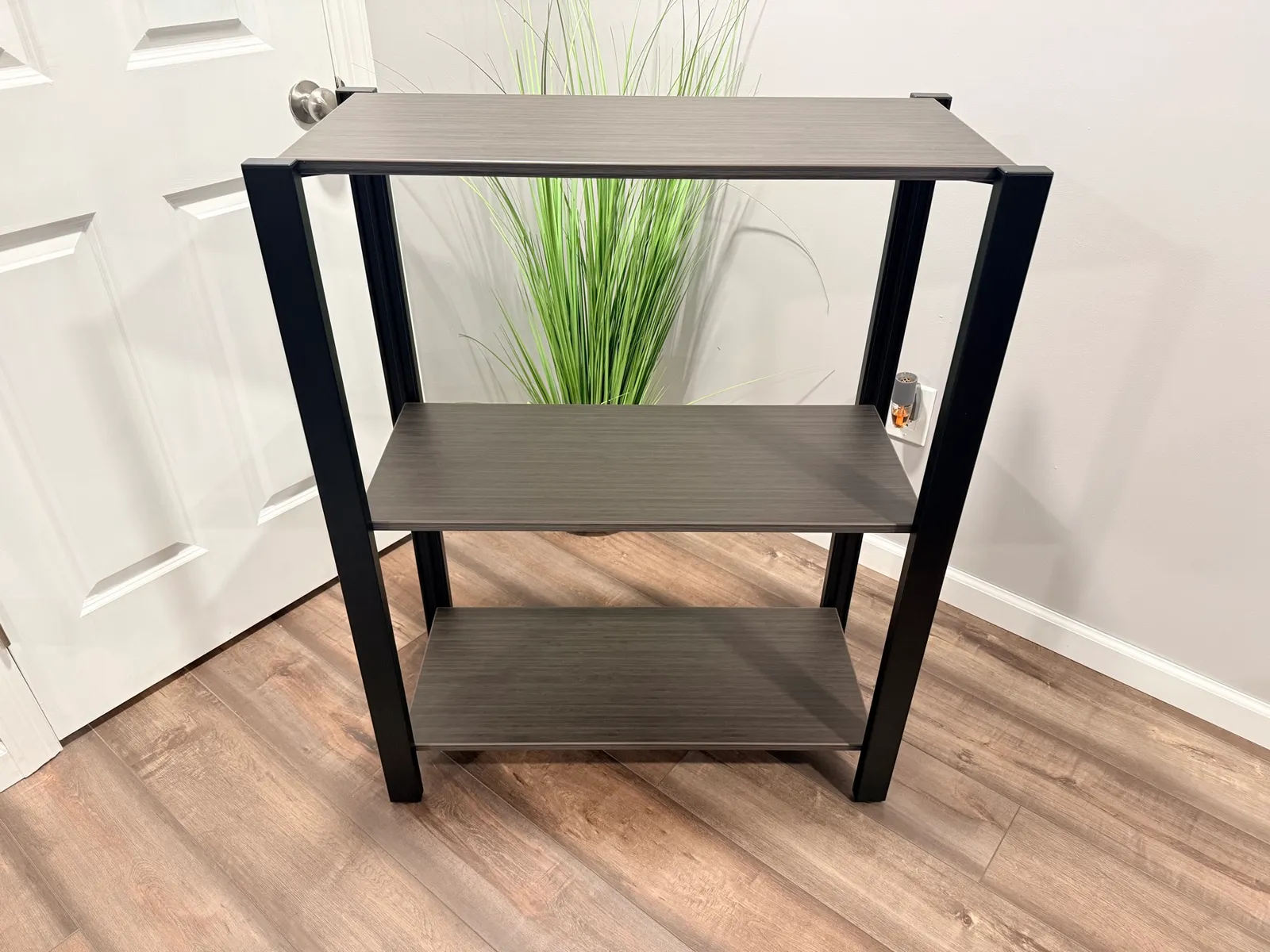
I configured mine as the Triple Short in Ash Gray with a black frame. That's three connected bays of open shelving in the shorter height. The Sequence Shelves are a modular system, so what you receive depends on the layout you pick, but the Triple Short ships as a single, well packed box of parts.
When I laid everything out, the part count was the first thing that stood out.
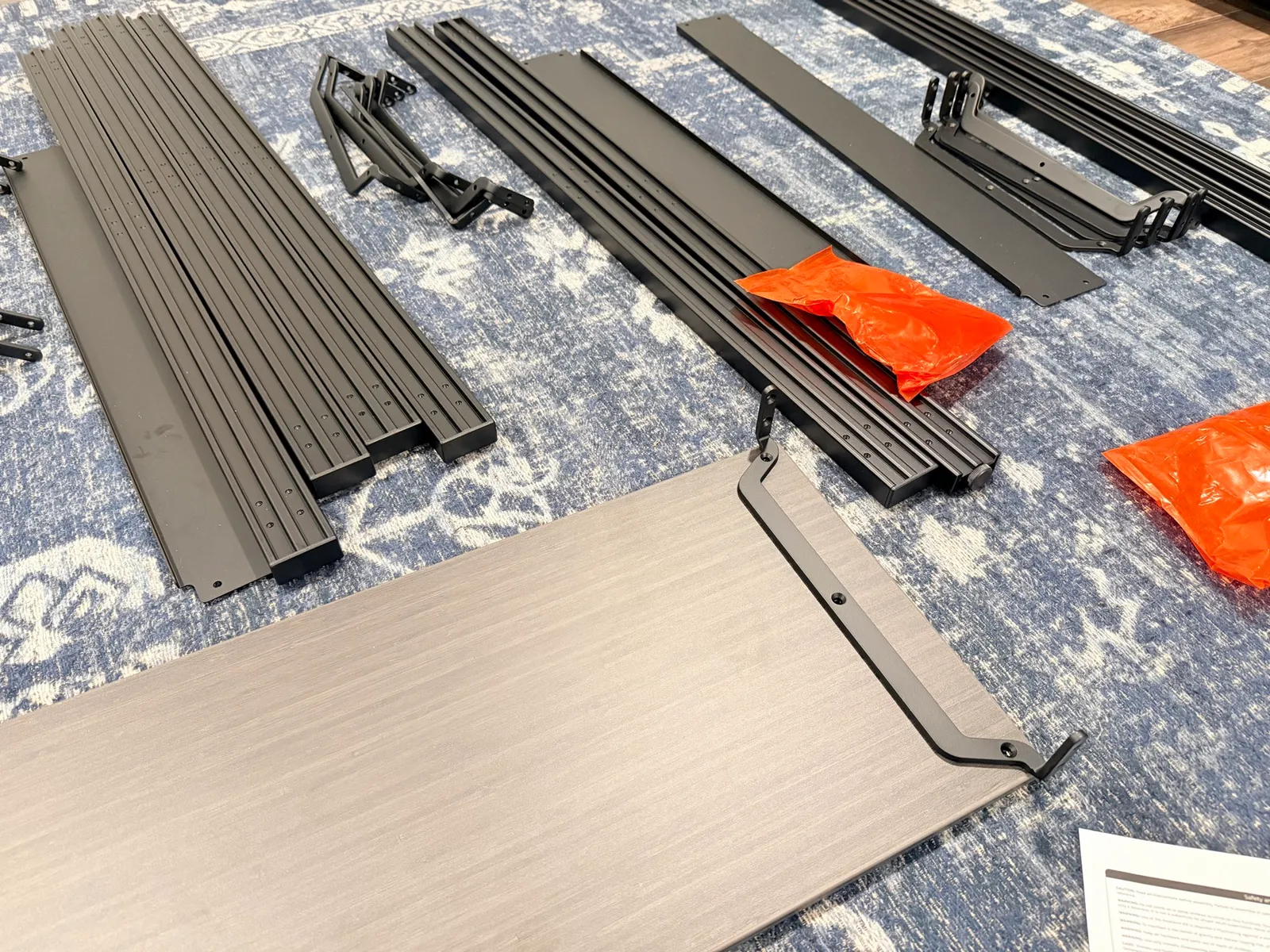
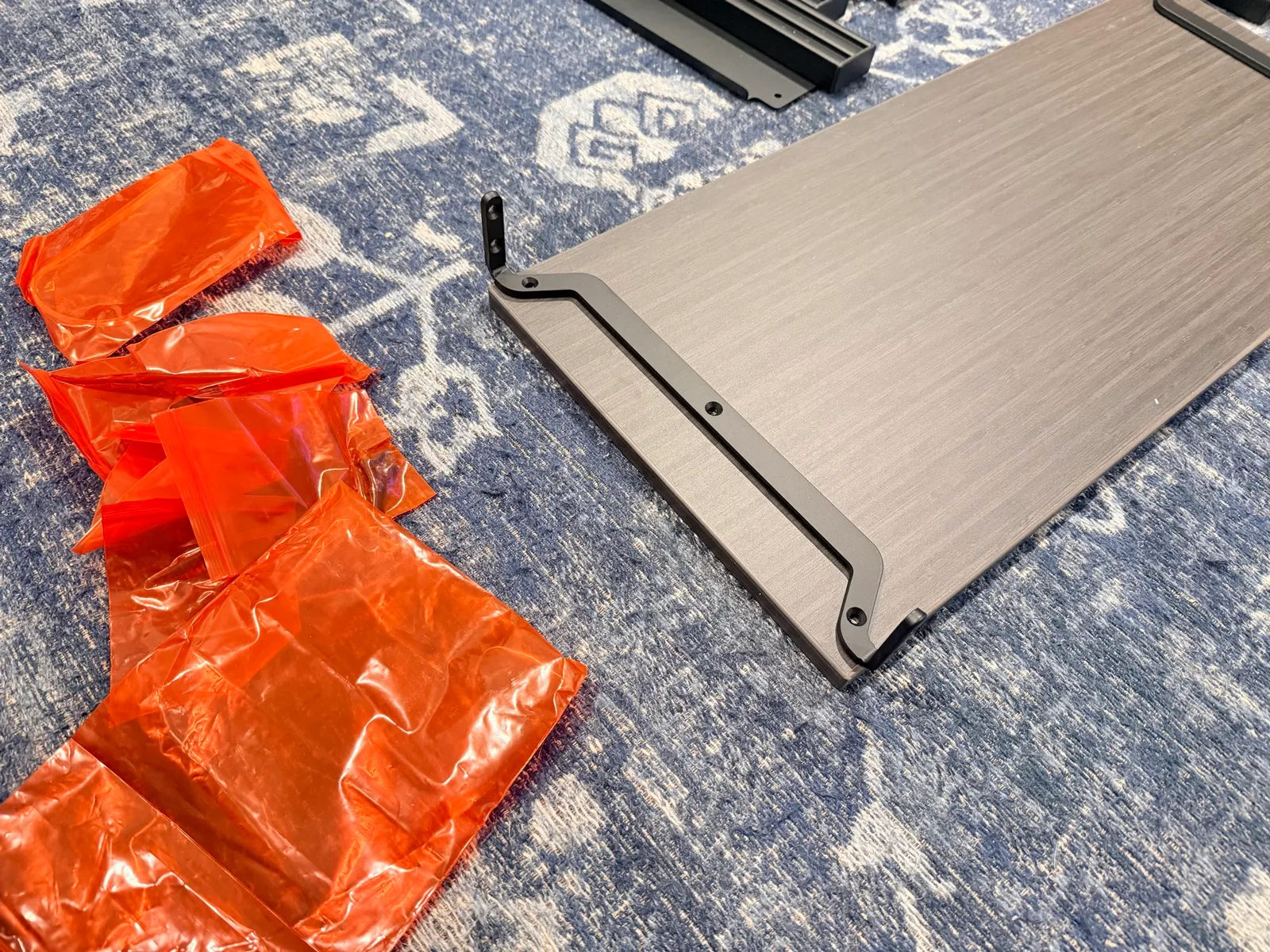
Here's what you're working with: the laminate shelf panels, the powder coated aluminum posts and steel supports that form the frame, the legs, and several bags of hardware. The reason there are so many pieces is that everything interconnects. The bays share uprights, so a three bay unit has more shared structure than three separate shelves would.
Why the Instructions Look Scarier Than They Are
The manual was the part that nearly threw me. Because the Sequence Shelves are modular, the same instructions cover the single Short Shelf, the Tall Shelf, the Double, the Triple, the Stepped layout, and the Bridge. So when you open the booklet, you're staring at steps for configurations you didn't buy.
Once I figured out which configuration I was building and ignored the rest, it got simple. My advice: identify your exact layout first, then follow only those steps. Don't try to read the whole manual front to back. It will make the project feel far more complicated than it actually is.
Assembly: It Clicks Together
I grabbed a drill and got started.
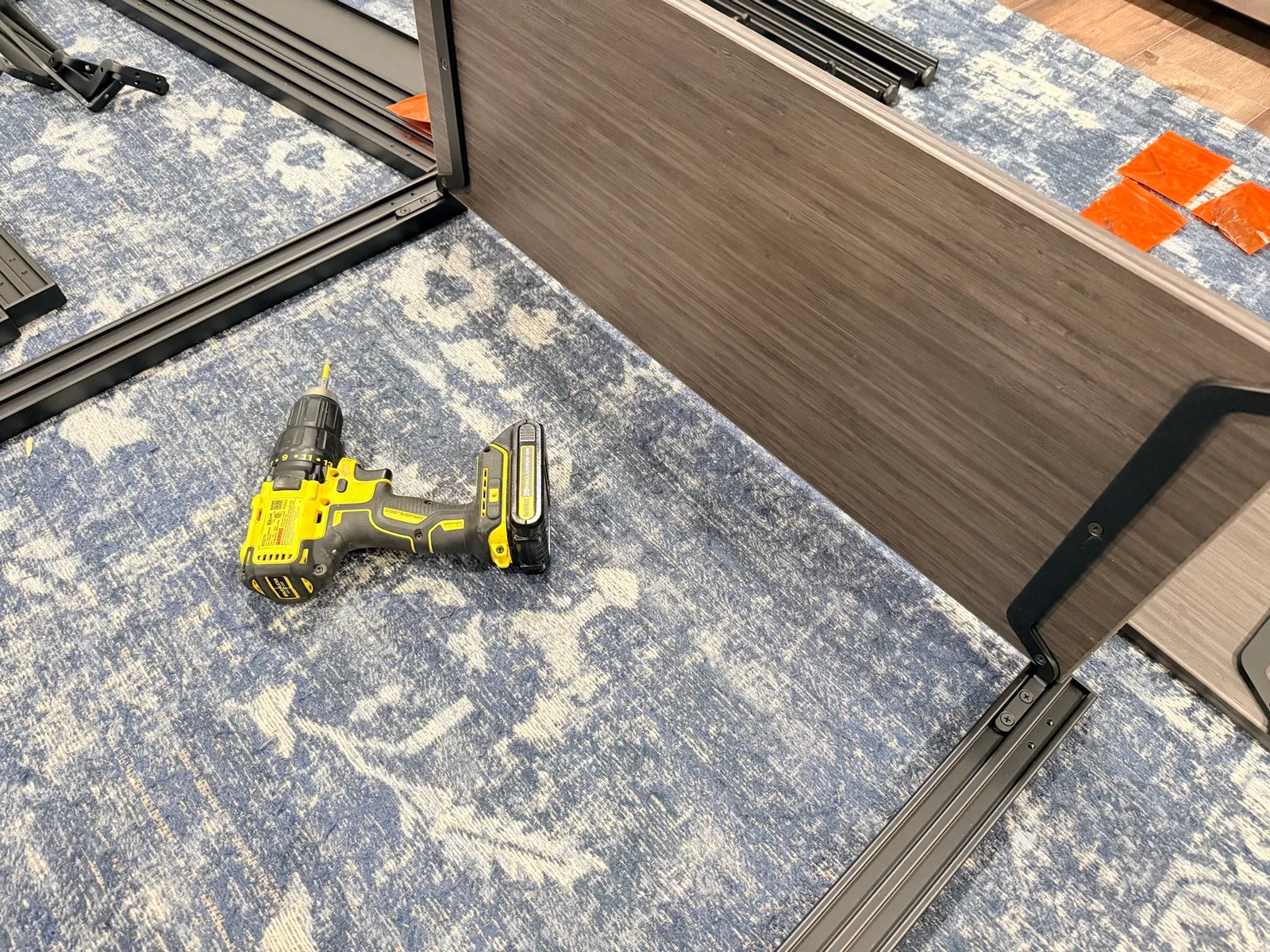
The pieces fit together precisely. Every rail lined up where it was supposed to, the hardware threaded cleanly, and nothing needed forcing. This is the part that surprised me after the intimidating unboxing. The actual building is intuitive. You connect the frame, drop in the shelves, and the structure takes shape fast.
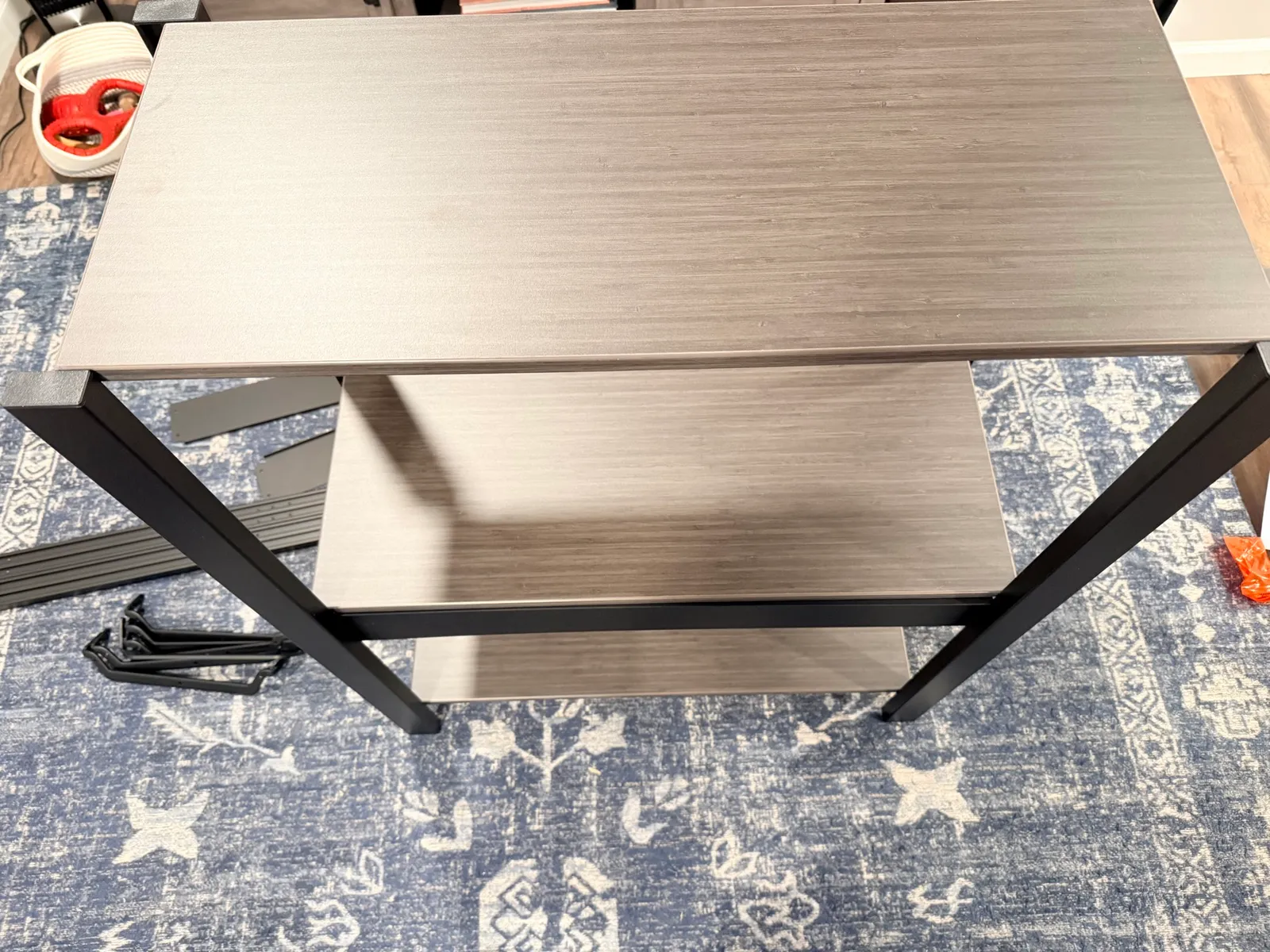
I did have a supervisor for most of it.

By the time the frame and the first shelves were together, I could already tell this was a different class of shelving from the flat pack stuff I'd built before.
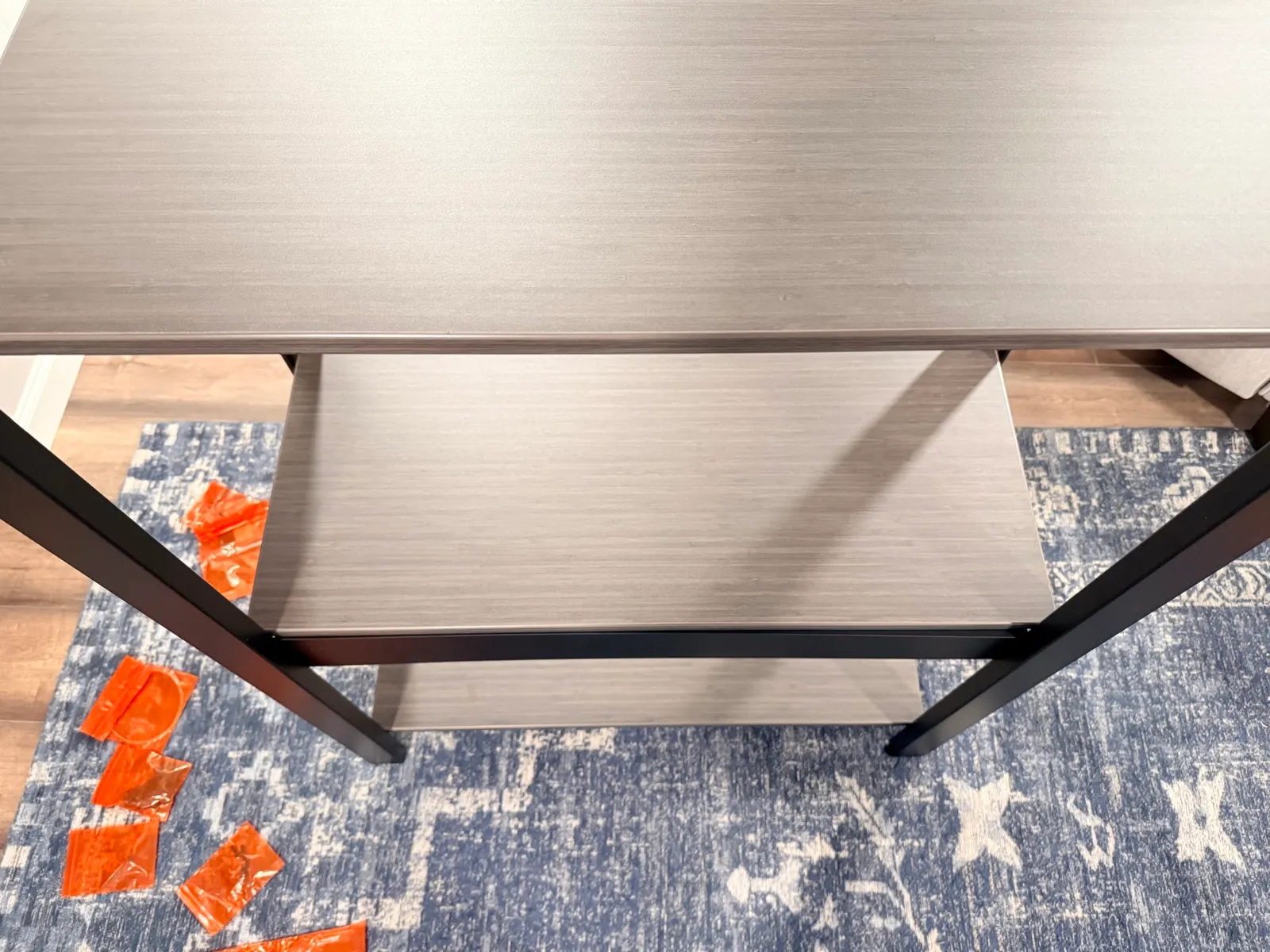
How Sturdy Is It, Really?
This is where the Sequence Shelves earn their keep. Once assembled, they're rock solid. No wobble, no flex, no creaking when you lean on them. The powder coated aluminum and steel frame and the way the bays tie together give the whole unit a planted, immovable feel.
I'll be honest. They felt so strong that I had a moment where I wondered if I could climb them like a ladder. Better judgment won out, and I did not test that theory. Please don't try that at home. But that's the confidence these give you once they're together. This is probably the most sturdy shelving I've owned, and I had zero worry about it going anywhere.
Where It Works
The Ash Gray laminate with the black frame looks clean and furniture grade. It doesn't read as office storage. Open on all sides, the Triple Short works as a long, low bookshelf, a credenza, a media console, or a room divider. And because the system is modular, you can reconfigure it later or expand with more bays if your space changes. If the clutter belongs at the workstation rather than elsewhere in the room, the UPLIFT Desk storage accessories guide covers under-desk drawers, laptop shelves, cubbies, and mobile caddies instead.
The Sequence line starts at $349+ for a single Short Shelf, and scales up from there based on the layout you pick. The Triple Short in laminate that I built adds $600 for the extra width, which brings it to about $949 as configured. That's the tradeoff with a modular system: you only pay for the size you actually need, so a single bay costs far less than my three bay setup.
Key Specs
| Spec | Detail |
|---|---|
| Configuration | Triple Short (three connected bays) |
| Finish | Ash Gray laminate shelves |
| Frame | Black powder coated aluminum posts and steel shelf supports |
| Height | Short height, roughly 40 inches (the line also offers a taller 76 inch option) |
| Design | Modular open shelving, expandable and reconfigurable |
| Assembly | Hardware included; a power drill makes it much faster |
| Starting price | $349+ (single Short Shelf) |
| As configured (Triple Short) | About $949 ($349 base plus $600 for the width) |
| Availability | In stock |
Frequently Asked Questions
How hard is the UPLIFT Sequence Shelves assembly?
Easier than the box suggests. The intimidating part is the number of pieces and a manual that covers every configuration. Once you identify your layout and start connecting the frame, it's intuitive and the pieces fit precisely. Give yourself time and a clear floor, and keep a drill handy.
Why are there so many parts?
Because the bays interconnect. A Triple Short is three bays that share uprights, so there's more shared structure than three standalone shelves would have. That interconnection is also why the finished unit is so rigid.
Do I need any tools to build them?
A power drill or driver makes assembly much smoother. You can work slower by hand, but a drill saves real time and effort, especially on a three bay unit.
Are the UPLIFT Sequence Shelves sturdy?
Very. Once assembled there's no wobble or flex. The aluminum and steel frame and the connected bays make the unit feel planted. It's the most solid shelving I've put together.
What finishes and configurations are available?
I built the Triple Short in Ash Gray with a black frame. The Sequence line is modular and comes in several widths and two heights, with multiple shelf finishes and frame colors, so you can match it to your space.
How tall are the short Sequence Shelves?
The short configuration stands about 40 inches tall. UPLIFT also offers a taller 76 inch version within the same modular system.
The Full Review Is Live
The follow-up to this unboxing is published: the UPLIFT Sequence Shelves review covers the full verdict, what the 50 pound shelf rating means in practice, which configuration to buy first, and how the system stacks up against a $50 flat pack shelf.
Related Guides
- Which UPLIFT Standing Desk Is Right for You?: The full UPLIFT lineup
- UPLIFT V3 Standing Desk Unboxing: Unboxing UPLIFT's flagship desk
- UPLIFT Parsons Standing Desk Unboxing: A furniture style standing desk build
- Desk Cable Management: Setup Guide: Keep the new shelves tidy
- Best Ergonomic Desk Setup: Complete Guide: The full workstation walkthrough